Sustainable Agriculture Through Modeling and Simulation (PhD)
2019 - 2023
Pioneered hybrid Life Cycle Assessment-Agent Based Model integrating nonlinear multi-objective optimization to balance environmental sustainability with economic viability in dairy farming. Simulated 1,800+ Luxembourg farms using Java and Python, optimizing operations across conflicting constraints (carbon footprint reduction, profitability, regulatory compliance). Developed Django web platform serving 10 regional stakeholders with real-time farm performance analytics. Research contributions include novel approaches to soybean reduction in dairy cattle diet reducing CH4 emissions, biogas feedstock optimization, and farmer decision-making simulation. Published several papers, demonstrating quantifiable environmental impact. Collaborated with agriculture consultants, engineers, and farmer cooperatives translating complex models into actionable policy recommendations.

Overview
This PhD research, conducted under the SIMBA project (funded by Luxembourg National Research Fund), developed a novel hard-coupled hybrid framework combining Life Cycle Assessment (LCA) with Agent-Based Modeling (ABM) and multi-objective optimization to assess and improve environmental sustainability of Luxembourgish agriculture.
Key Achievement: Created the first hard-coupled ABM-LCA model that enables farmer agents to optimize their farms from both economic AND environmental standpoints, providing crucial decision support for agricultural policy makers.
Research Context
The Global Challenge
Agriculture accounts for approximately 21% of global greenhouse gas emissions, drives over 90% of tropical deforestation, and faces increasing pressure to feed a growing population (60% increase needed by 2050) while reducing environmental impact.
The Luxembourg Context
This research directly supported Luxembourg's and EU's sustainability goals:
- EU Common Agricultural Policy (CAP) green architecture
- EU Green Deal objectives
- Effort Sharing Regulation (ESR) targets (10% emission reduction by 2030)
- Luxembourg's National Plan for Sustainable Agriculture
- Farm to Fork Strategy
The Research Gap
Traditional LCA models oversimplify human behavior and decision-making in complex agricultural systems. This research addressed this critical gap by integrating human behavior modeling through ABM, capturing:
- Farmer decision-making processes
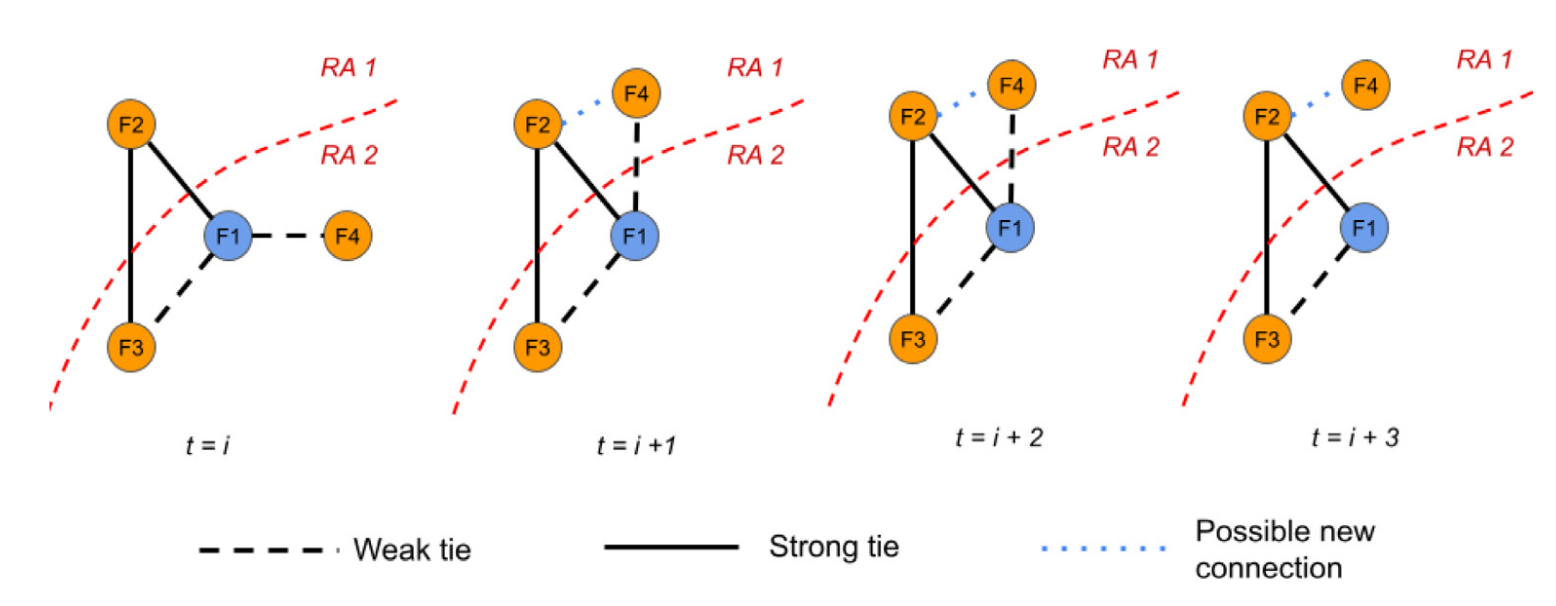
- Social interactions and information sharing
- Environmental awareness evolution
- Behavioral adaptation to policies
Novel Methodology: The SIMBA Framework
1. Hard-Coupled ABM-LCA Integration
What makes it "hard-coupled"?
- At each monthly time step, LCA results directly influence ABM agent decisions
- Environmental impact calculations feed back into farmer behavior models
- Creates dynamic feedback loop between environmental impacts and farming decisions
The Innovation: Unlike soft-coupling (LCA after ABM) or tight-coupling (LCA uses ABM outputs), hard-coupling enables bi-directional influence - environmental awareness changes farmer behavior in real-time.
2. Agent-Based Modeling Components
Spatial Scale: All Luxembourgish agricultural land (excluding pastures, vineyards, orchards)
Temporal Resolution: Monthly time steps over multi-year simulations
Primary Production Units:
- Animals: Individual livestock modeled with phenotypical characteristics affecting emissions
- Fields: Crop production with detailed rotation requirements
Farmer Agent Behavior:
- Autonomous decision-making following pre-set rules
- Information exchange with neighboring farmers
- Environmental awareness that evolves through social interactions
- Adaptation based on economic incentives and environmental feedback
3. Territorial Life Cycle Assessment
Approach Type: Attributional LCA with prospective elements
Functional Unit: The land within Luxembourg's geographical boundaries dedicated to agriculture and farming production activities
Scope: Cradle-to-farmgate (excludes post-farm transportation)
System Boundaries:
- Foreground: Direct farming activities (crop cultivation, livestock management, biogas production)
- Background: Supply chain processes (fertilizer production, energy generation, feed imports)
 Figure: Foreground, background and system boundaries of LCA as implemented in SIMBA
Impact Categories Assessed:
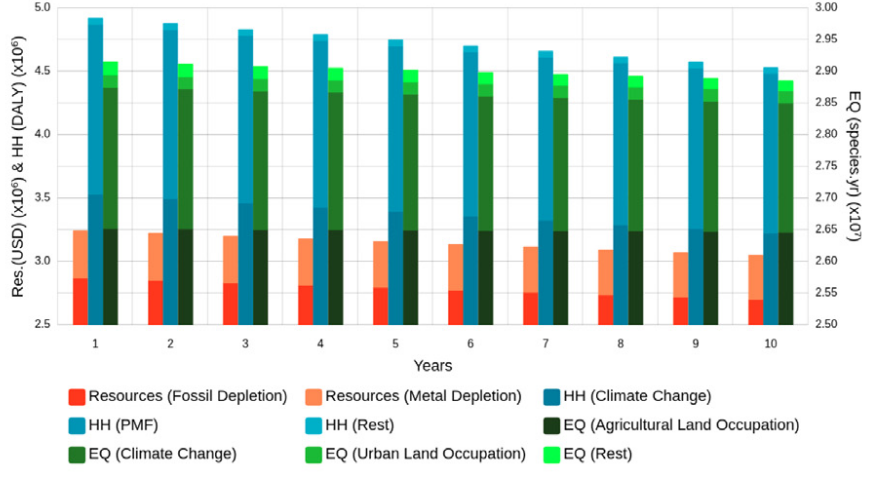
- Climate change (GHG emissions)
- Eutrophication (nutrient pollution)
- Acidification
- Land use change
- Energy consumption
- Water quality
4. Multi-Objective Optimization
Mathematical Framework: Nonlinear optimization under constraints
Decision Variables:
- Land-use allocation (crop types, rotation patterns)
- Animal population density
- Feed composition
- Manure management strategies
- Biogas feedstock composition
Objectives:
- Economic: Maximize farm profitability
- Environmental: Minimize GHG emissions, eutrophication, acidification
Constraints:
- Technical feasibility (crop rotation requirements)
- Economic viability (minimum income thresholds)
- Environmental regulations (nitrate directives)
- Land availability
- Market demand
Research Structure and Publications
The thesis followed a progressive publication-based approach, with each chapter building upon previous findings:
 Figure: Organization of the thesis in building blocks - showing progression from ABM-LCA coupling to optimization
Research Questions Addressed:
- Chapter 2: What are the consequences of farmer behaviors concerning environmental consciousness and their interactions?
- Chapter 3: What are the financial and environmental outcomes of livestock farming using the coupled ABM-LCA model?
- Chapter 4: How can biogas production be modeled and increased from different feedstock compositions?
- Chapter 5: Can mathematical optimization balance economic and environmental sustainability?
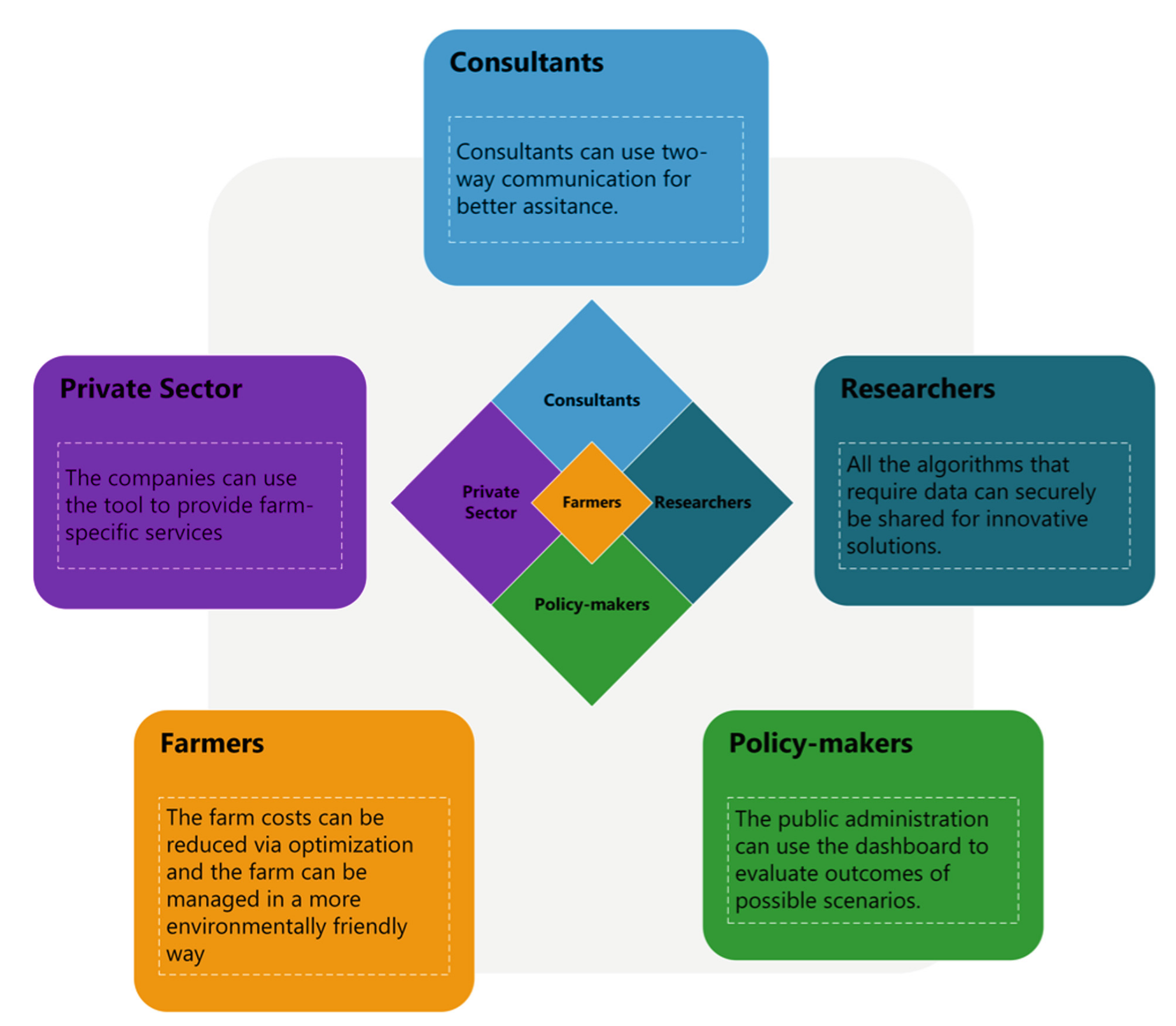
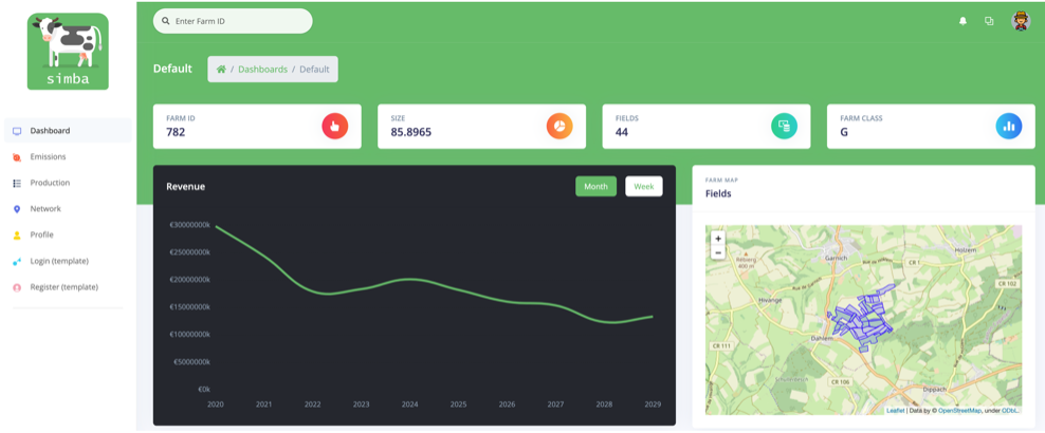
- Chapter 6: Dashboard development for stakeholder visualization and decision support
Technical Implementation
Data Platform & Visualization
Engineered and deployed a comprehensive decision support system featuring:
- Django-based web platform for real-time farm performance monitoring
- Interactive dashboards visualizing environmental and economic trade-offs
- Advanced data analytics processing data from 1,800+ farms
- Integration with 10 regional stakeholder systems (farmers, cooperatives, government agencies)
- PostgreSQL database for robust data management
- Geospatial visualization of environmental impacts across Luxembourg
ABM Simulation Engine
Built sophisticated simulation models using Python and Java capable of:
- Monthly time-step simulations over multi-year periods
- Individual animal modeling with phenotypical characteristics
- Crop rotation modeling with technical constraints
- Social network modeling for farmer interactions
- Dynamic behavior adaptation based on environmental awareness
- Parallel scenario evaluation for policy assessment
LCA Computation Framework
Implemented using Brightway2 framework with:
- Prospective inventory databases using premise tool
- IAM scenario integration for future projections
- Dynamic characterization factors for GHG impacts
- Monte Carlo uncertainty analysis
- Regional data customization for Luxembourg context
Key Findings and Policy Implications
Based on extensive case studies using the hybrid ABM-LCA model, the research yielded critical insights for sustainable agriculture policy:
Environmental and Social Dynamics
-
Information Sharing Reduces Environmental Impact: The connection between farmers and information exchange significantly lessens overall negative environmental impacts. Social networks and environmental awareness evolution play crucial roles in adoption of sustainable practices.
-
Economic Viability of Reduced Stocking: It is possible to lower livestock stocking rates without jeopardizing long-term economic viability. The model identified optimal stocking densities that balance profitability with environmental sustainability.
Feed and Resource Management
-
Soybean Import Reduction Strategies: Two viable pathways identified:
- Diet alteration: Modifying animal feed composition
- Local production increase: Expanding soybean cultivation in Luxembourg
- Both strategies can significantly reduce environmental footprint of imported feed
-
Biogas Production Potential: Substantial increase in biogas production is achievable through:
- Additional animal manure utilization
- Integration of food waste into biogas feedstock
- Optimized feedstock composition balancing energy output and environmental impact
Economic-Environmental Trade-offs
- Optimization Reveals Clear Trade-offs: Multi-objective optimization of farming activities exposes fundamental tensions between:
- Profit maximization vs. Emission reduction
- Short-term economic gains vs. Long-term sustainability
- Individual farm profitability vs. Territorial environmental goals
Policy Relevance: These trade-offs provide policymakers with quantitative evidence to design targeted subsidies and regulations that incentivize environmentally sustainable practices while maintaining farm economic viability.
Impact
Academic Contributions
- 6 peer-reviewed publications in high-impact journals
- Novel methodological framework adopted by other researchers
- Contribution to sustainable agriculture modeling literature
Practical Applications
- Decision support tools for farmers
- Policy evaluation framework for regulators
- Benchmarking system for farm performance
- Evidence base for sustainable farming transitions
Technologies Used
- Programming: Python, Java
- Modeling: Agent-Based Modeling, Life Cycle Assessment
- Optimization: Multi-objective optimization algorithms
- Web Development: Django, PostgreSQL
- Data Science: Machine Learning, Data Analytics, Statistical Analysis
- Visualization: Interactive dashboards and reporting tools
Publications
This research resulted in 6 peer-reviewed publications covering:
- Methodological advances in hybrid LCA-ABM modeling
- Environmental assessment of dairy farming systems
- Policy scenario analyses
- Farm-level optimization strategies
- Sustainability transitions in agriculture
Collaboration
This research was conducted at the Luxembourg Institute of Science and Technology (LIST) in collaboration with:
- University of Luxembourg (Doctoral School)
- Agricultural stakeholders and farmer associations
- Environmental agencies
- Regional agricultural development bodies
Future Directions
The framework developed in this research provides a foundation for:
- Expanding to other agricultural sectors (crops, mixed farming)
- Incorporating climate change projections
- Integrating with precision agriculture technologies
- Scaling to regional and national assessments
- Supporting EU agricultural policy development